For internationals buying in the Netherlands
Buy a Dutch house
without the language barrier.
The Dutch housing market moves fast, bids over asking, and every document that matters is in Dutch. PlotScore reads the registers for you and gives you one honest English report per address — so you're not the only person in the room who can't see what's really there.
You're competing against buyers who grew up navigating the Kadaster, the WOZ, the bestemmingsplan and the energielabel, often with a buying agent doing the reading for them. As an international, you're expected to overbid on a €500,000 decision in a language you're still learning, in a week. PlotScore closes that gap: paste any address, get every fact that a local due-diligence check would surface, in plain English, in ten seconds.
Dutch addresses
Every report
Per report
To try
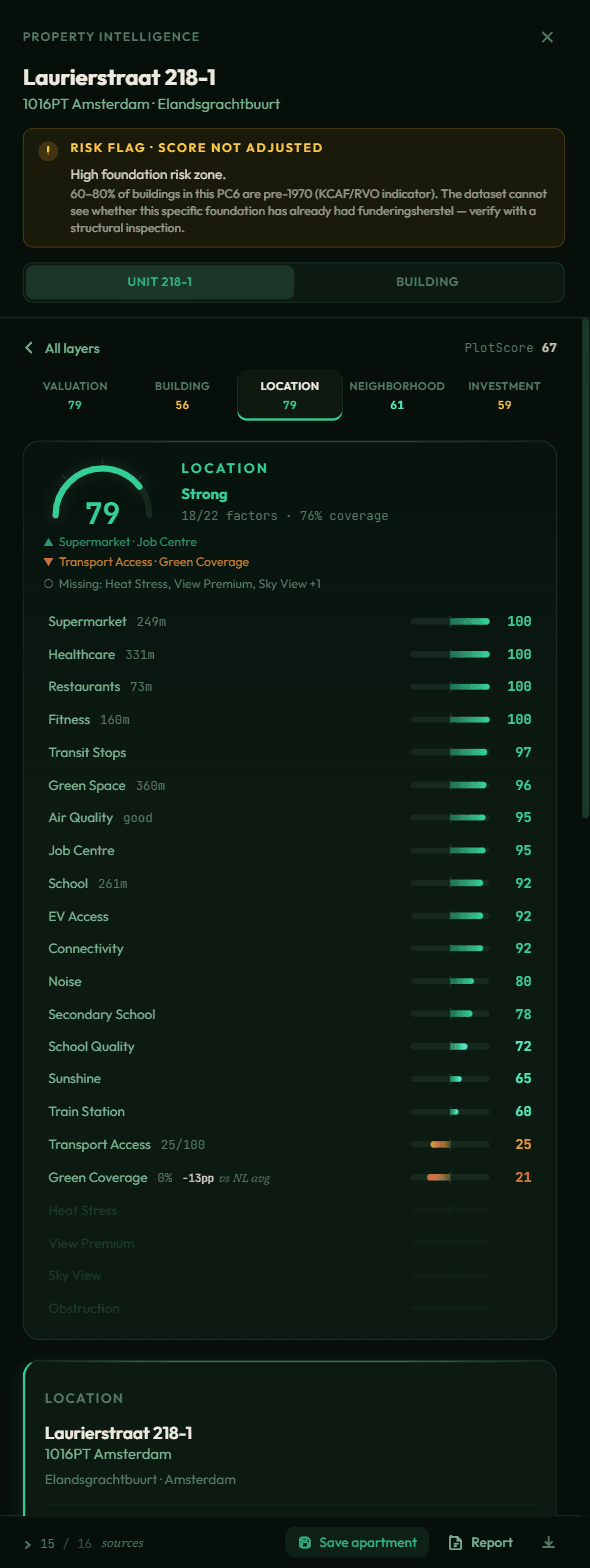
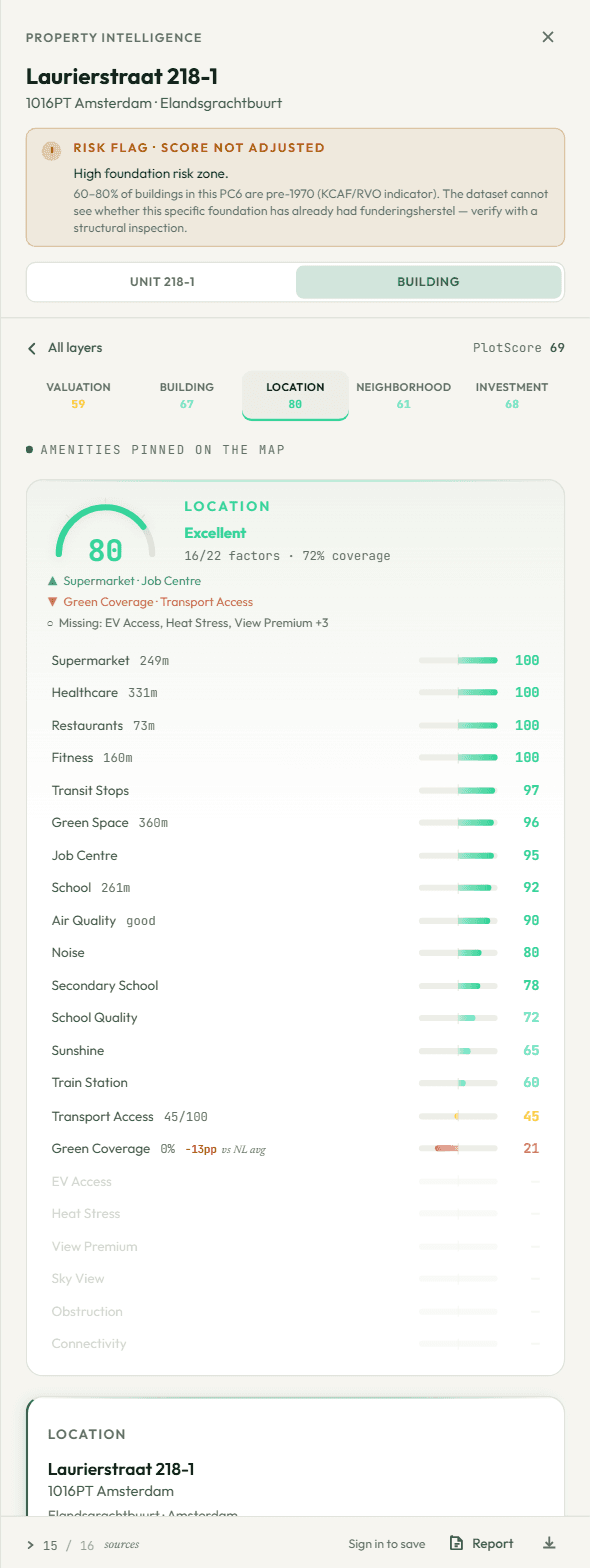
The actual product — not a mockup
The market Funda shows you is in Dutch. This isn't.
All 183,755 Amsterdam buildings, scored from the same public registers a Dutch buyer's makelaar quietly checks — in English, in one map. The layers a bidding war never leaves you time to research: where you'd overpay, which stock has an honest energy label, and which pre-war houses sit on wooden piles.
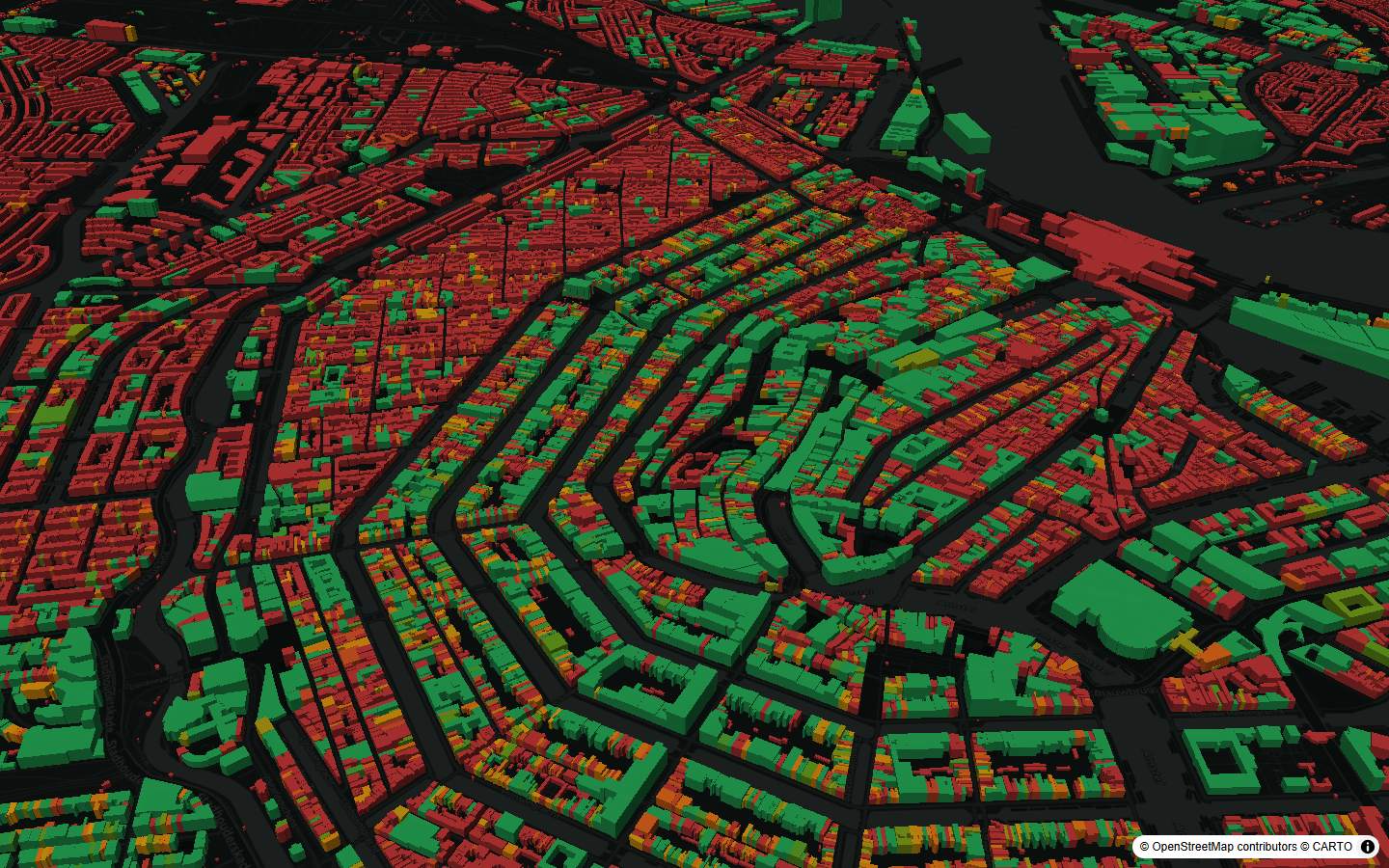
Property value
Product data · 183,755 buildings · Amsterdam · BAG · 3DBAG · WOZ · EP-Online · Netbeheer NL · CBS
Score a specific address →Layers in this atlas
- Property value — Every building's value position in the city — spot the streets where you'd overpay, and the ones nobody's noticed yet.
- Energy labels — 59,773 registered labels (EP-Online) — G-to-A is often the difference of a real monthly energy bill. Unlabelled stock stays dark.
- Foundation risk — ±54,000 pre-war buildings on wooden piles — the classic five-figure surprise. See the risk before you bid, not after.
- Noise — Traffic, rail and industry noise per building (RIVM) — the thing a Saturday-morning viewing can't tell you.
- Leefbaarometer — The official national liveability grade for every block — meting 2024, 100 m grid.
© OpenStreetMap contributors © CARTO
Five of 20+ layers. Browse the Amsterdam neighborhood guides →
The reality
Everyone else in the room can read the file. You can't.
The listing is translated for you. The energielabel, the WOZ-beschikking, the bestemmingsplan, the funderingsonderzoek, the erfpacht terms — are not. These are exactly the documents that decide whether a house is a good buy or a five-figure mistake, and they sit across twelve different Dutch government portals that assume you read bureaucratic Dutch and have an afternoon spare.
So most internationals do the only thing they can: trust the broker, who works for the seller, and bid high to be safe. That's how people end up owning a G-label house on wooden piles, next to a plot with a permit for a four-story build that will wall off their light — facts that were public the whole time.
PlotScore does the reading for you. One address, one English report, every factor a careful local buyer would check, each one traceable back to the public source so you (or your notaris) can verify it. You walk into the bezichtiging knowing more about the house than the person selling it.
What's in your report
The Dutch due-diligence check, in English.
Fair price, not asking price
The official WOZ value, its five-year trajectory, and a modeled expected sale price with recent comparable sales nearby — so you know whether an over-asking bid is fair or fear.
Energy label & running costs
The current energielabel, typical monthly energy cost for the building type, what a step upgrade costs, and which subsidies you'd qualify for — decoded from the registers, not the brochure.
Foundation & flood risk
Whether a pre-war house sits on wooden piles (the classic funderings surprise), plus measured noise and official flood zones — the risks a Saturday viewing and a translated listing never mention.
Neighborhood reality
Average income, population trends, the official Leefbaarometer liveability grade, safety, amenities, and international-school reach — how the buurt actually is, and where it's heading.
Zoning and what you can build
The bestemmingsplan for the plot in plain English: current building rights, and whether you could legally extend, convert the attic, or add a dakkapel later.
Erfpacht and restrictions
Ground-lease (erfpacht) exposure, monument status, and conservation rules that limit what you can change — surfaced before you fall for the facade, not at the notaris.
A real viewing
Saturday, 11:00 bezichtiging. You've got 20 minutes.
A makelaar in the kitchen, another couple at the door, and a listing you can only half-read. Here's how PlotScore changes that viewing when Dutch isn't your first language.
- Fri
The night before
You paste the address into PlotScore. Ten seconds later you have the full report in English. The energielabel is G, the WOZ has been flat for three years while the buurt is up 12%, the house is pre-war on wooden piles, and there's a pending permit for a four-story build on the plot behind.
- 11:00
Walk in prepared
You're not asking the makelaar to translate the energy label. You're asking why it's a G and what a C would cost. You're not guessing about foundation risk or planning — you already know, in your own language.
- 11:15
Spot what's missing
The broker shows you the sunny garden. You already know the neighboring plot has a permit that will put a four-story wall along it. You ask directly. That was never going to come up otherwise.
- 11:45
Bid with data, not fear
You leave with a clear yes, no, or conditional-on-price — and a number you can defend. Not the broker's optimism, not a panic over-bid to feel safe. A decision built on every factor that matters, each one you can double-check.
Buyer-ready
See the house behind the Dutch listing.
PlotScore is live and every report is in English. Score three properties free with any account, then the Buyer's Pass is €39 for 30 days of unlimited scoring — a rounding error against the house you're about to bid half a million on.